

Website development is the process of creating and building websites. It involves designing, coding, and implementing various elements to make a website functional and visually appealing. Developers use programming languages like HTML, CSS, and JavaScript to bring websites to life.
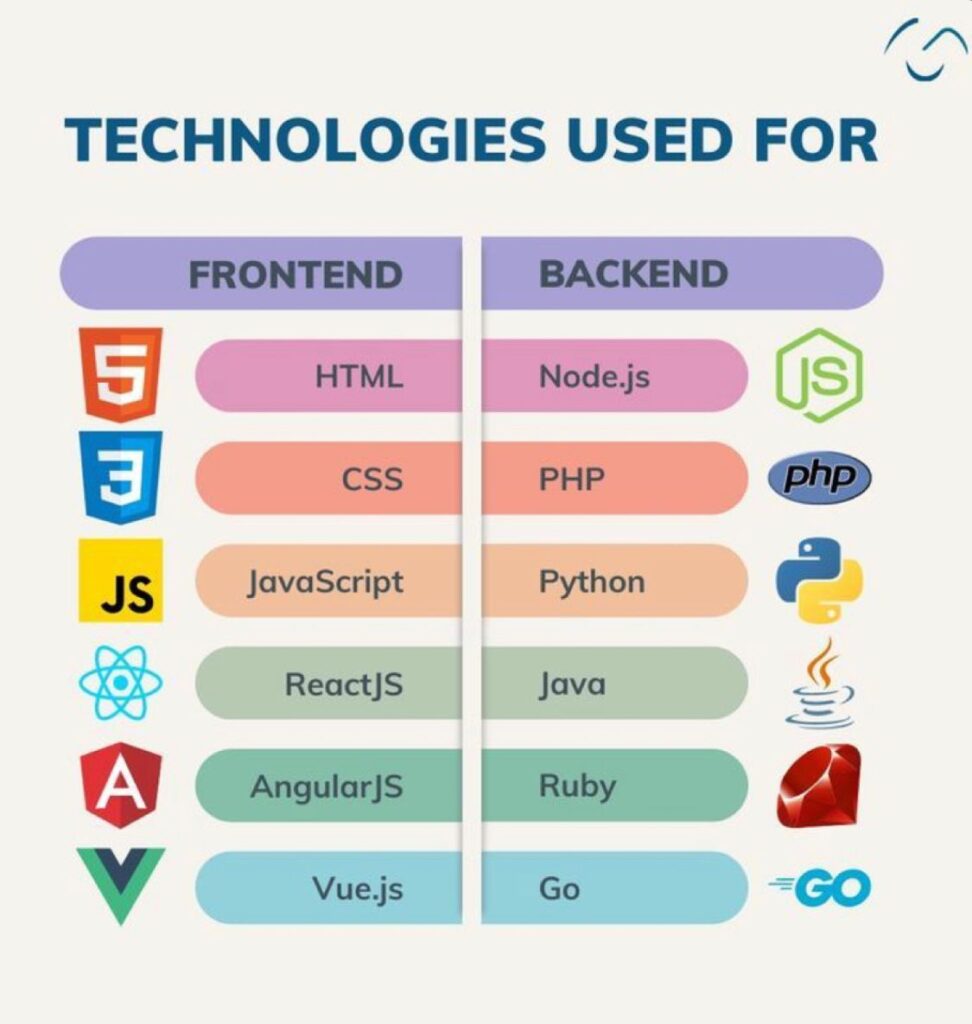
Technologies used for website development
1- BACK-END DEVELOPMENT: Backend development is an essential part of web development that focuses on the server side of things. It involves building the logic and functionality behind websites and web applications. Let’s dive into it!
Backend development involves using programming languages like Python, PHP, Ruby, or Node.js to create the server-side code that runs on the web server. This code handles tasks such as processing user requests, interacting with databases, and generating dynamic content to be sent back to the user’s browser.
One of the key aspects of backend development is creating APIs (Application Programming Interfaces). APIs allow different software systems to communicate with each other. They enable your web application to interact with external services, such as payment gateways, social media platforms, or other third-party applications. By integrating APIs, you can enhance the functionality and user experience of your web application.
Another important aspect of backend development is working with databases. Databases are used to store and retrieve data for your web application. Common database systems include MySQL, PostgreSQL, MongoDB, and SQLite. Backend developers use database query languages like SQL to interact with databases, perform CRUD operations (Create, Read, Update, Delete), and ensure data integrity and security.
Security is a crucial concern in backend development. Backend developers implement various security measures to protect user data and prevent unauthorized access. This includes implementing user authentication and authorization mechanisms, encrypting sensitive data, and applying security best practices to prevent common vulnerabilities like SQL injection or cross-site scripting (XSS) attacks.
Performance optimization is another important aspect of backend development. Backend developers optimize the performance of web applications by fine-tuning code, optimizing database queries, and implementing caching techniques. This ensures that the application runs smoothly, handles a large number of concurrent users, and delivers a fast and responsive user experience.
Backend development also involves working with frameworks and libraries that provide pre-built components and tools to streamline development. Examples of backend frameworks include Django (Python), Laravel (PHP), Ruby on Rails (Ruby), and Express.js (Node.js). These frameworks provide a structured way to build web applications, handle routing, manage databases, and implement security measures.
In summary, backend development is all about building the server-side code, APIs, and databases that power web applications. It involves using programming languages, working with databases, ensuring security, optimizing performance, and utilizing frameworks. It’s an exciting field that plays a crucial role in creating robust, dynamic, and secure web applications.
2- DATABASE: In the world of technology, databases are like organized storage spaces for all kinds of information. They are used to store, manage, and retrieve data in a structured manner.
Databases come in different types, but the most common ones are relational databases and non-relational databases. Relational databases, such as MySQL and PostgreSQL, organize data into tables with predefined relationships between them. This makes it easy to establish connections and perform complex queries. On the other hand, non-relational databases, like MongoDB and Redis, store data in a more flexible and scalable way, making them suitable for handling large amounts of unstructured or semi-structured data.
Databases are used in various applications and industries. For example, on e-commerce websites, databases store product information, customer details, and order data. In social media platforms, databases store user profiles, posts, and interactions. Even in everyday life, databases are used in banking systems, healthcare records, and inventory management systems.
To interact with a database, developers use a language called SQL (Structured Query Language). SQL allows them to write queries to retrieve, insert, update, and delete data from the database. With SQL, you can perform operations like searching for specific records, sorting data, and aggregating information.
One important concept in databases is normalization. It’s a process of organizing data in a way that minimizes redundancy and ensures data integrity. By breaking down data into smaller, atomic pieces, normalization helps maintain consistency and prevents data anomalies.
Databases also provide features to ensure data security. Access control mechanisms allow administrators to define user roles and permissions, ensuring that only authorized individuals can access or modify the data. Encryption techniques can be applied to protect sensitive information stored in the database, making it unreadable to unauthorized parties.
In addition to storing data, databases also offer functionality for data manipulation and analysis. Aggregation functions, like sum, average, and count, allow you to generate insights from your data. Join operations enable you to combine data from multiple tables based on specific conditions. These features make databases powerful tools for data-driven decision-making.
As technology advances, new types of databases are emerging. For example, there are graph databases that specialize in handling complex relationships, time-series databases for managing time-dependent data, and document databases for storing and retrieving JSON-like documents.
In conclusion, databases are crucial components of modern applications, enabling efficient storage, management, and retrieval of data. They come in different types, offer query languages like SQL, and provide features for security.
3- APIs: Let’s dive into the world of APIs. APIs, or Application Programming Interfaces, are like bridges that allow different software systems to communicate and interact with each other.
Think of APIs as a set of rules and protocols that define how different software components can interact and exchange information. They provide a way for developers to access specific functionalities and data from other applications or services without having to build everything from scratch.
APIs are used in a wide range of scenarios. For example, social media platforms like Facebook and Twitter provide APIs that allow developers to integrate their applications with these platforms. This integration enables functionalities like sharing content, logging in with social media accounts, and retrieving user data.
APIs are also commonly used in web development. Web developers can use APIs to access services such as weather data, mapping services, payment gateways, and more. This allows them to enhance their websites with dynamic and real-time information.
One popular type of API is the RESTful API. REST stands for Representational State Transfer, and it is an architectural style that defines a set of principles for building web services. RESTful APIs use HTTP methods like GET, POST, PUT, and DELETE to perform operations on resources. They typically return data in a format like JSON or XML, making it easy for applications to consume and process the information.
Another type of API is the SOAP API, which stands for Simple Object Access Protocol. SOAP APIs use XML for data exchange and rely on the XML-based SOAP protocol for communication. SOAP APIs are commonly used in enterprise applications and web services that require more complex interactions and protocols.
API documentation plays a crucial role in helping developers understand how to use an API. It provides details about the available endpoints, request/response formats, authentication methods, and any additional parameters or headers required for successful API calls.
APIs have become an integral part of modern software development, enabling developers to leverage existing services and functionalities, saving time and effort. They promote modularity, reusability, and interoperability between different systems.
In conclusion, APIs are the glue that connects different software systems, allowing them to exchange information and perform actions. They provide a standardized way for developers to access and utilize functionalities from external services, making it easier to build powerful and integrated applications.
4- SECURITY: Security is a crucial aspect of our digital lives, Aman. It ensures that our information and data are protected from unauthorized access, breaches, and malicious activities. In today’s interconnected world, where we rely heavily on technology, it’s important to understand the importance of security and take necessary measures to safeguard our personal and sensitive information.
One of the key elements of security is strong and unique passwords. Using weak or easily guessable passwords puts your accounts and data at risk. It’s advisable to create complex passwords that include a combination of uppercase and lowercase letters, numbers, and special characters. Additionally, using a different password for each online account is essential to prevent a domino effect if one account is compromised.
Another important aspect of security is keeping your devices and software up to date. Regularly updating your operating system, applications, and antivirus software ensures that you have the latest security patches and protection against known vulnerabilities. Hackers often exploit outdated software to gain unauthorized access to devices and networks.
Phishing attacks are a common method used by cybercriminals to trick individuals into revealing sensitive information. Be cautious of unsolicited emails, messages, or phone calls that ask for personal information or attempt to redirect you to suspicious websites. Always verify the authenticity of the sender before sharing any sensitive data.
Encryption is a powerful tool to protect your data. It scrambles your information, making it unreadable to unauthorized individuals. Many messaging apps and websites use encryption to ensure the privacy and security of your conversations and transactions. Look for services that offer end-to-end encryption, which means only the intended recipient can decrypt and read the messages.
Public Wi-Fi networks can be convenient, but they also pose security risks. Avoid accessing sensitive information or making financial transactions while connected to public Wi-Fi. If you must use public Wi-Fi, consider using a virtual private network (VPN) to encrypt your internet connection and protect your data from prying eyes.
Regularly backing up your data is another important security measure. In case of device loss, theft, or hardware failure, having backups ensures that you don’t lose valuable information. Cloud storage services and external hard drives are great options for backing up your files.
Lastly, it’s crucial to be mindful of the information you share online. Limit the personal details you provide on social media platforms and adjust your privacy settings to control who can access your information. Be cautious when sharing personal information with unknown or untrusted sources.
5- PERFORMACE OPTIMIZATION: Performance optimization is all about making things run faster and more efficiently. Whether it’s a website, an app, or even your own computer, optimizing performance can greatly enhance the user experience. Here are some tips to help you get started:
- Minimize and compress: One way to improve performance is by minimizing the size of your files. This can be done by compressing images, reducing the amount of code, and removing unnecessary elements. Smaller file sizes mean faster load times, which can greatly improve the overall performance.
- Caching: Caching is a technique that stores frequently accessed data in a temporary storage location. By caching certain elements of your website or app, you can reduce the amount of time it takes to retrieve and load data, resulting in a faster and smoother user experience.
- Code optimization: Optimizing your code can have a significant impact on performance. This includes removing redundant code, optimizing loops and algorithms, and using efficient data structures. Writing clean and efficient code can greatly improve the speed and responsiveness of your application.
- Database optimization: If your application relies on a database, optimizing its performance is crucial. This can be done by indexing frequently accessed data, optimizing queries, and reducing the amount of unnecessary data being stored. A well-optimized database can greatly improve the overall performance of your application.
- Server optimization: If you’re hosting a website or an application, optimizing your server can make a big difference. This includes configuring server settings, optimizing server-side scripts, and using caching mechanisms to reduce server load and improve response times.
- Performance testing: Regularly testing the performance of your website or application is important to identify bottlenecks and areas for improvement. There are various tools available that can help you analyze and measure the performance of your application, allowing you to make informed optimization decisions.
- Mobile optimization: With the increasing use of mobile devices, optimizing your website or app for mobile platforms is essential. This includes using responsive design, optimizing images for mobile devices, and reducing the amount of data being transferred.
Remember, performance optimization is an ongoing process. As technology evolves and user expectations increase, it’s important to continuously monitor and improve the performance of your applications. By following these tips and staying up to date with the latest optimization techniques, you can ensure that your website or app delivers a fast and seamless experience for your users.